Blog

  • Soft Robots Power Flexible Manufacturing’s Next Era

    Soft Robots Power Flexible Manufacturing’s Next Era

    Welcome to educatin.site. Today, we’re exploring a quiet revolution happening on the factory floor: flexible manufacturing. This modern approach demands production systems that can switch quickly between making different products.

    The key enabler for this adaptability is emerging technology, specifically soft robotic actuators. These devices are radically changing how automation handles product variety, moving beyond the rigid, clunky machines of the past.


    Understanding Flexible Manufacturing

    Traditional manufacturing lines are often set up to produce one product efficiently, like a specific model of car or phone. Changing that line to make a new product is a lengthy and expensive process called retooling.

    Flexible manufacturing, by contrast, is designed for rapid adjustment. Think of a single line producing both small, delicate electronics and larger, robust components within the same hour.

    This requires machinery that can dynamically change its grip, force, and movement. It’s all about minimizing downtime and maximizing the ability to handle a variable product portfolio.

    Why Flexibility is Essential

    Consumer demands are constantly shifting, leading to shorter product life cycles and more customization. Companies must react quickly to these changes or risk falling behind.

    A flexible system allows a manufacturer to produce smaller batches of diverse products economically. This capability minimizes waste, reduces storage costs, and keeps inventory fresh and relevant.

    It moves the focus from sheer volume to agile response, ensuring the production process supports modern market dynamics.


    Introducing Soft Robotic Actuators

    An actuator is essentially the ‘muscle’ of a robot, converting energy into motion. Historically, these have been rigid motors, pistons, and gearboxes made of hard materials like metal.

    Soft robotic actuators, however, are made from compliant materials such as silicone, rubber, and flexible polymers. They mimic biological muscle structures, allowing for safer, gentler, and more adaptable movements.

    Instead of relying on complex mechanical linkages, they often use fluid pressure—pneumatics or hydraulics—to inflate and deform. This allows them to bend, twist, and grip with inherent compliance.

    How Soft Actuators Work

    Consider a simple, air-powered soft actuator. It consists of a chamber with patterned channels; when air is pumped in, the chamber expands and curls in a predictable direction.

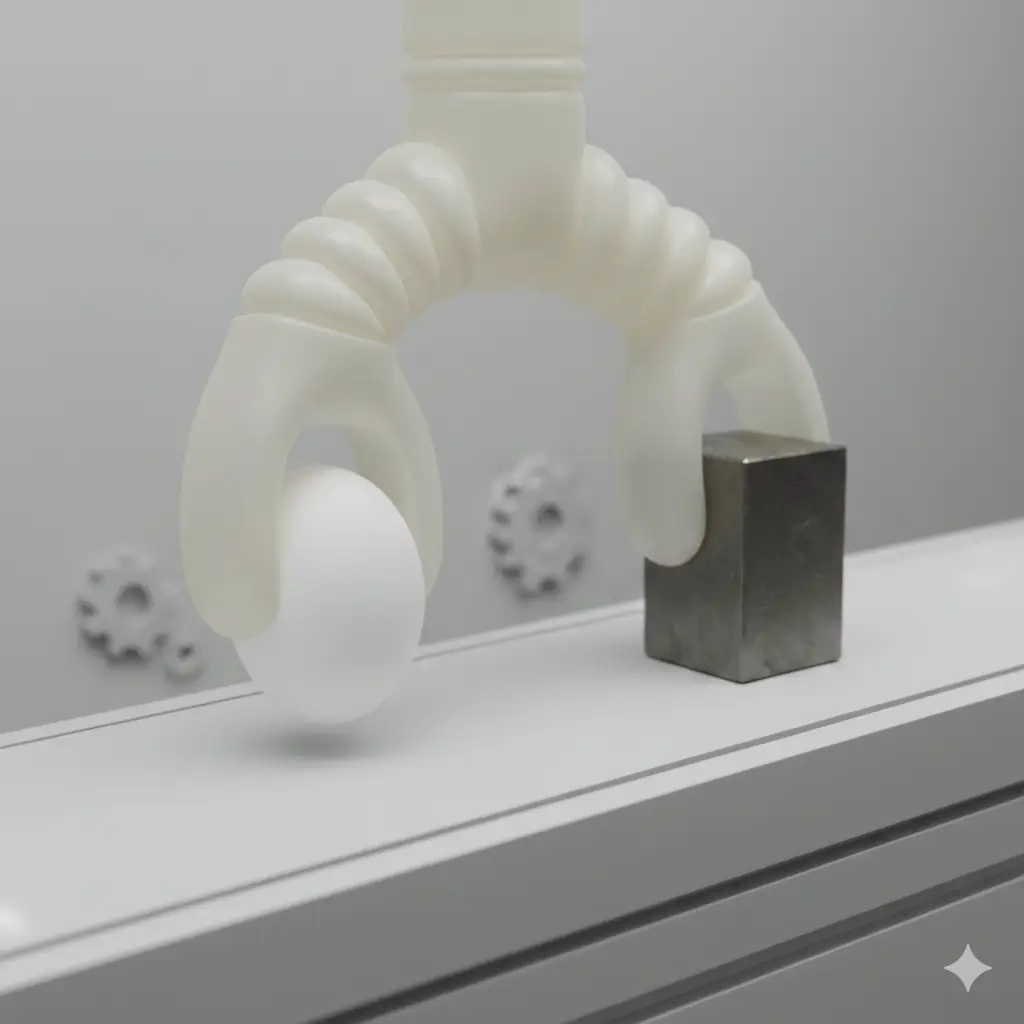
    This basic principle allows the actuator to gently conform to the shape of any object it touches. They can pick up a delicate raspberry with the same mechanism used to lift a metal cylinder.

    Their compliance means they can absorb shock and distribute force evenly, which is critical when handling sensitive or oddly shaped items without causing damage.


    Optimizing for Variable Product Lines

    This is where soft robotics truly shines in the flexible manufacturing environment. Their inherent adaptability solves many long-standing automation challenges.

    Key Advantages in Handling Variability

    Traditional rigid grippers must be custom-machined for a specific part. If the product size changes, the gripper must be replaced, leading to expensive downtime.

    Soft grippers and actuators offer intrinsic adaptability. A single soft gripper can handle a wide range of shapes and sizes—from a flat circuit board to a complex, curved casing—without any hardware changes.

    They are also inherently safer for workers, as they lack the high-impact, crushing force of rigid components, making human-robot collaboration easier.

    • Shape Conformity: Soft actuators naturally mold to irregular or varied geometry, unlike fixed mechanical jaws.
    • Variable Force Control: They can be programmed to exert precise, gentle force, easily switching from handling fragile glass to heavy plastic.
    • Reduced Tooling Costs: Manufacturers save significantly by not needing to design and purchase a new end-effector for every product variant.
    • Faster Changeovers: Software adjustments to air pressure or control parameters replace time-consuming physical hardware changes.

    Ultimately, this ability to adapt quickly and broadly is what defines a truly flexible production line.

    A Look at Specific Applications

    In electronics assembly, soft actuators can gently handle flexible printed circuit boards, ensuring fragile components aren’t stressed or cracked.

    In the food industry, they are perfect for picking and packing delicate items like fruit and baked goods, reducing product damage dramatically compared to traditional suction cups or claws.

    For consumer goods, the same robotic arm might switch from assembling a perfume bottle cap to packaging a shampoo dispenser just by adjusting the air pressure.


    Technical Design & Future Outlook

    The design of these actuators is constantly advancing, focusing on materials science and control systems. Researchers are developing smart materials that can change stiffness on command.

    This means a gripper could be soft for the picking process and then momentarily stiffen up to ensure stable, secure transport. This capability adds another layer of dynamic flexibility.

    Actuator Type Material Flexibility Primary Use Case
    Pneumatic Bellows High General object gripping (variable shape)
    Hydraulic Chambers Medium-High High-force, flexible manipulation
    Shape Memory Alloys Variable (Stiffens) Precision positioning and latching

    Further innovation will focus on making the control of these systems simpler and more intuitive for factory operators, integrating them seamlessly with existing automation infrastructure.

    Design Insight: The true elegance of soft robotics lies in using material properties to solve complexity. By making the hardware compliant, the need for intricate programming to avoid collisions or damage is significantly reduced, simplifying the overall system design.

    The next generation of flexible manufacturing hinges on making this compliance a standard feature, not an exception.


    Conclusion

    The shift to flexible manufacturing is more than a trend; it’s an economic necessity driven by modern consumer behavior. Soft robotic actuators are proving to be the ideal ‘muscles’ for this new, adaptable production environment.

    By offering intrinsic shape and force adaptability, they make rapid product variation not just possible, but efficient and economical. They are the quiet engine driving the factory of the future.

    We can expect to see soft robotics move from niche applications to becoming a foundational element across all industries demanding high flexibility and gentle handling.

  • Plant-Inspired Soft Robots: Morphing and Motion Mimicry

    Plant-Inspired Soft Robots: Morphing and Motion Mimicry

    Unveiling the Power of Plant Movement

    When we think of movement in nature, our minds often jump to animals—running, flying, or swimming. But plants, seemingly static, perform some of the most elegant and efficient motions on Earth.

    These movements, driven by changes in cell pressure or differential growth, offer engineers a blueprint for creating a new generation of adaptable and compliant machines: soft robots.

    Soft robotics is all about using flexible, elastic materials to build machines that can interact safely with the environment and people. What better inspiration than organisms that change their shape without any rigid joints?

    The Three Plant Movement Prototypes

    Engineers studying soft morphing focus mainly on three core types of plant movement. Each offers a unique mechanism for actuation—the process of initiating motion or control.

    Mimicking these natural mechanisms allows us to design robotic components that can subtly and continuously change their form, much like a growing vine or a closing Venus flytrap.

    1. Mimicking Tropisms: Directional Response

    A tropism is a growth or turning movement in response to an external stimulus, where the direction of the movement is determined by the direction of the stimulus itself. Think of a sunflower tracking the sun across the sky.

    Phototropism (response to light) and gravitropism (response to gravity) are the most studied examples. Plants achieve this by uneven cell elongation, often guided by hormones.

    In soft robotics, we mimic this with materials that expand or contract asymmetrically when exposed to a specific cue, like heat or light. A light-sensitive polymer strip, for instance, could bend toward a light source.

    This provides a simple, energy-efficient way for a robot to autonomously orient itself toward a desired condition or resource.

    Micro-Case Example:

    A research team developed a soft, cylindrical actuator coated in a black layer. When one side is heated with a laser, the material expands and bends in that direction, performing a precise thermotropism that can be used for steering a micro-robot.

    2. Nastic Motion: Independent of Direction

    Nastic movements are rapid, non-directional responses to a stimulus. Unlike tropisms, the movement’s direction is pre-determined by the plant’s structure, not the stimulus’s source.

    The famous closing of the Venus flytrap or the rapid folding of a sensitive plant’s (Mimosa pudica) leaves when touched are classic examples of thigmonasty (response to touch).

    These motions are usually powered by turgor pressure changes—the plant quickly shifts water volume between specialized motor cells. This results in incredibly fast, hinge-like actions.

    In soft systems, this is translated into actuators that rapidly inflate or deflate chambers with air or liquid. This allows for quick grasping, opening, or closing actions, useful for sorting or gripping fragile objects.

    It’s about high-speed shape change, moving from one stable state to another without the slow, continuous adjustment seen in tropisms.

    3. Growth-Like Actuation: Irreversible Morphing

    The third, and perhaps most complex, inspiration is growth itself. Plants achieve impressive feats of deployment—like a tightly folded leaf unfurling or a root forcing its way through soil.

    This type of actuation is often irreversible, meaning the structure stays in its new shape. It mimics the fundamental biological process of a cell changing its size permanently.

    Engineers achieve this growth-like morphing using techniques like additive manufacturing (3D printing) where new material is deposited to permanently extend a structure, or by using swelling hydrogels that expand and lock into a new configuration.

    This is crucial for applications that require a robot to navigate a tight space and then stiffen or expand into a complex, load-bearing structure, such as anchoring a sensor in a deep crevice.

    The Material Science Foundation

    The success of soft morphing hinges on the materials used. They must be highly responsive to external cues and possess the right mechanical properties to ensure repeated, reliable motion.

    Common materials include hydrogels, which change volume in response to $\text{pH}$ or temperature; shape memory polymers, which can be programmed to remember a second shape; and various elastomers (like silicone) embedded with active fibers or fluidic channels.

    The key insight borrowed from plants is the use of composites. Plants achieve sophisticated bending because their tissues have different stiffnesses on opposite sides of the bending region—a principle directly applied in soft pneumatic actuators.

    Future Applications and Innovations

    The goal is not just to make devices that look like plants, but to capture the underlying principles of their efficiency, silence, and compliance. This technology holds promise across several fields.

    • Minimal-Invasive Surgery: Deployable surgical tools that can navigate the body’s complex pathways and then expand or grasp precisely.
    • Reconfigurable Structures: Architectural elements or camouflage systems that change shape in response to environmental conditions like light or heat.
    • Search and Rescue: Robots that can grow and extend into rubble or wreckage to look for survivors without disturbing unstable environments.

    Strong Insight:

    The ultimate efficiency of plant-inspired robotics lies in distributed actuation. Instead of one large motor, the entire structure acts as the motor, leading to silent, gentle, and highly compliant movement.

    Notes on Challenges and Outlook

    While inspiring, plant-like actuation is not without its challenges. The response speed of some swelling polymers can be too slow for many robotic tasks, and controlling the precise degree of bending is often difficult due to material non-linearity.

    However, ongoing research is improving the integration of smart sensors into these materials and developing faster-responding hydrogel and polymer blends. This is accelerating the transition from laboratory prototypes to practical applications.

    The future of soft robotics is inherently green—not just in color, but in the bio-inspired efficiency and graceful movement of its natural mentors. We are learning to build machines that bend, grow, and respond with the silent, adaptive power of a sunflower or a root tip.

  • The Rise of Smart Fluids: Adaptive Actuation with MR and ER Materials

    The Rise of Smart Fluids: Adaptive Actuation with MR and ER Materials

    In the world of advanced engineering, the search for materials that can instantaneously adapt their mechanical properties is relentless. This quest has led to the emergence of smart fluids, a fascinating class of materials whose properties can be controlled by external fields. Chief among these are Magnetorheological (MR) and Electrorheological (ER) fluids.

    These fluids are not just scientific curiosities; they are foundational to the next generation of adaptive actuation, promising faster response times and more precise control in devices ranging from car suspensions to prosthetic limbs. Understanding how they work is key to appreciating their potential.

    How Smart Fluids Achieve Control

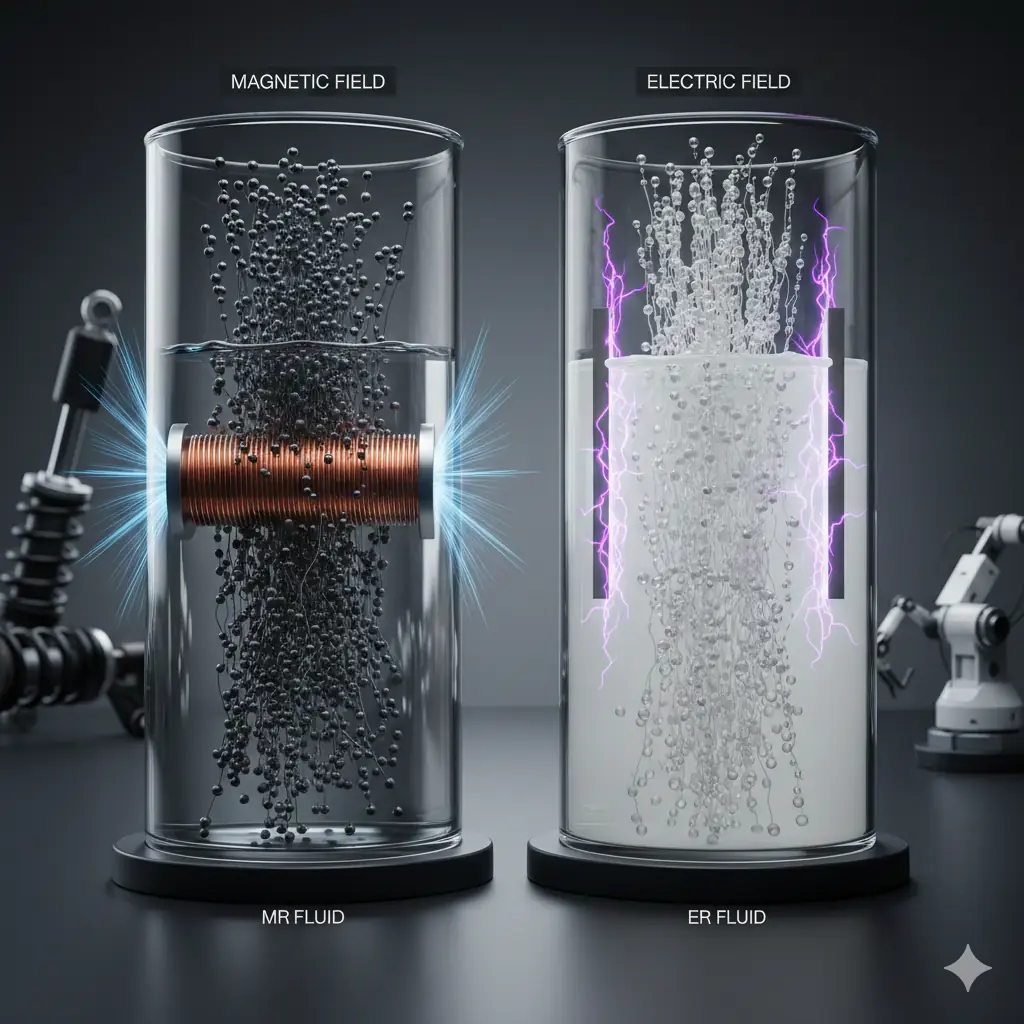
    At their core, both MR and ER fluids are colloidal suspensions. They consist of micron-sized, active particles suspended within a non-conductive, inert carrier fluid, such as mineral or silicone oil. Their ‘smart’ behavior stems from the way these dispersed particles react to an applied field.

    When the field is absent, the particles remain randomly suspended, and the fluid flows freely, much like a simple liquid. However, upon activation, the particles quickly polarize and align themselves into strong chain-like or columnar structures along the direction of the applied field.

    This rapid microstructural change transforms the fluid from a free-flowing liquid into a viscoelastic, solid-like material. The force required to break these internal chains is known as the yield stress, which can be continuously and reversibly controlled by adjusting the intensity of the external field.

    Magnetorheological Fluids: Magnetic Control

    Mechanism of MR Fluids

    Magnetorheological (MR) fluids utilize a magnetic field for their state change. The dispersed particles are typically highly magnetizable materials, like carbonyl iron powder. When a magnetic field is applied, the induced magnetic dipoles cause the particles to rapidly chain together.

    The strength of the resulting solid-like state, and thus the fluid’s ability to resist flow, is directly proportional to the magnetic field intensity. This effect is powerful and robust, offering a substantial change in yield stress—sometimes up to 50–100 kPa.

    MR Fluid Advantages and Applications

    A major advantage of MR fluids is their high yield stress and their relative insensitivity to contaminants or temperature fluctuations, which makes them robust for industrial use. They also operate with low-voltage, high-current power supplies, making the control systems straightforward.

    The most widespread commercial application is in semi-active dampers and shock absorbers, like those found in high-performance vehicles such as the Cadillac CT5-V Blackwing. By varying the magnetic field, the suspension can instantly stiffen to provide stability during a sharp turn or soften for a comfortable highway ride. MR fluids are also used in controllable clutches and brakes.

    Electrorheological Fluids: Electric Control

    Mechanism of ER Fluids

    Electrorheological (ER) fluids, on the other hand, rely on an electric field. Their dispersed particles are dielectric or semi-conducting materials. Applying an electric field induces electrical polarization, which drives the particles to form chains between the electrodes—an effect often called the Winslow effect.

    Like MR fluids, the magnitude of the yield stress is tunable by varying the electric field strength. Their core distinction is that they require a high-voltage, low-current power supply, in contrast to the magnetic systems.

    ER Fluid Advantages and Applications

    The primary advantage of ER fluids is their ultra-fast response time, often in the millisecond range, making them incredibly dynamic. While traditional ER fluids historically offered a lower yield stress compared to MR, modern advances, such as Giant Electrorheological (GER) fluids, are significantly closing this gap.

    ER fluids are promising for applications demanding high speed and precision, such as small-scale microfluidic devices and haptic feedback systems, including tactile displays. They are also explored for use in vibration control for civil structures and in highly responsive micro-actuators in robotics.

    Comparative Analysis of Smart Fluids

    When selecting a smart fluid for an application, engineers weigh the trade-offs between magnetic and electric control. The choice usually depends on the specific demands of the system.

    MR fluids are the current commercial favorite where high force transmission is paramount, such as in heavy-duty truck seating suspensions or seismic dampers in buildings. They offer superior yield stress with relatively low power consumption for the control system itself.

    ER fluids are generally favored in environments where the response speed is the absolute most critical factor, often in fine-motor control or sensing applications. However, they also face challenges related to particle sedimentation and the need for robust sealing against the high operating voltages.

    The Future of Adaptive Actuation

    The continuous development of these smart fluids is focused on overcoming their current limitations, such as the long-term stability and temperature sensitivity of the materials. Researchers are working to create new particle formulations that increase yield stress, reduce sedimentation, and broaden the operational temperature range.

    The synergy between smart fluid technology and advanced control algorithms—often involving real-time microprocessors and sensors—is key to their success in the field of adaptive actuation. Systems can now react to changing conditions in milliseconds, far exceeding the capability of purely mechanical or passive systems.

    For instance, in the aerospace industry, smart fluids could enable wing flaps that instantly change their aerodynamic profile based on turbulence, offering both increased fuel efficiency and greater safety. This capability to actively manage mechanical properties marks a true revolution.

    Key Statistics and Figures

    • Response Time: Both MR and ER fluids typically achieve a state change in under 10 milliseconds.
    • Yield Stress (MR): Commercial MR fluids can achieve yield strengths of 50–100 kPa in the presence of a magnetic field.
    • Power Control: MR devices use a low-voltage (e.g., 12–24 V) power supply; ER devices require a high-voltage (e.g., 1–5 kV/mm) supply.
    • Force Amplification: Smart fluid devices are excellent power amplifiers, where a small amount of control power dictates a large amount of mechanical power output.

    As research progresses, the lines between MR and ER performance will likely blur, and highly optimized smart fluid systems will become ubiquitous. These materials are transitioning from laboratory novelties to mainstream engineering tools, underpinning a future where mechanical systems are not just reactive, but truly adaptive.

  • Material Intelligence: Gradients Drive Autonomous Shape Change

    Material Intelligence: Gradients Drive Autonomous Shape Change

    Material Intelligence: Gradients Drive Autonomous Shape Change

    Welcome to educatin.site! We’re diving into a topic that sounds like science fiction but is rapidly becoming reality: Material-Level Intelligence. This concept is all about building decision-making and action directly into the structure of a material, letting it respond to its environment without complex, external circuits or sensors.

    The key to this revolution lies in mechanical gradients, which are subtle, controlled variations in properties like stiffness or density within a single piece of material. Instead of a uniform object, we are creating structures that have a built-in ‘map’ of mechanical differences. It’s a beautifully elegant form of engineering.

    By mimicking natural structures, like the gradual hardening of bone or the varying flexibility of a plant stem, engineers are designing materials that can autonomously change shape. This process eliminates the need for bulky actuators, leading to lighter, more efficient, and truly adaptive systems.

    Defining Mechanical Gradients

    A mechanical gradient simply means that a material’s physical property, such as its stiffness or elasticity, changes smoothly across its volume. Think of a gradient as a ramp, not a stair-step; the change is continuous.

    In practice, this means one side of a material might be highly flexible, like rubber, while the opposite side is rigid, like hard plastic. Crucially, the transition between these two states is not a sharp boundary but a gradual, deliberate blend.

    These gradients are often engineered using advanced techniques like additive manufacturing (3D printing). By carefully controlling the mixing ratios of polymers or the curing conditions across the print bed, designers can dictate the exact mechanical map of the final object.

    The Mechanism of Autonomous Shape Change

    The magic happens when a material with a built-in gradient is exposed to an external stimulus, such as heat, light, moisture, or even a pH change. Because the material’s stiffness varies, different parts of the structure respond differently to the same stimulus.

    Imagine a flat sheet of material where the top layer is very soft and the bottom layer is quite stiff. When the entire sheet is heated, the softer side might try to expand or contract much more than the stiffer side. This differential response creates an internal stress.

    This internal stress forces the material to curve or buckle in a predictable way. The initial shape and the direction of the gradient predetermine the final, activated shape. The material essentially calculates its own optimal response based on its internal design, hence the term ‘material-level intelligence’.

    The Role of Differential Stress

    Differential stress is the driving force behind the shape transformation. It’s similar to how a bimetallic strip works in a thermostat, but far more complex and versatile. This stress is caused by the differing reactions of the varying stiffnesses.

    When the flexible part changes dimension more than the rigid part, the internal tension causes the whole structure to bend towards the side that resisted the change. The degree and direction of the bend are programmed into the material’s composition.

    For example, a gradient designed to change stiffness along a diagonal will result in a twisting motion, whereas a gradient along the length will cause a simple curl. This precision allows for complex 3D shape changes from simple flat sheets.

    Applications in Robotics and Beyond

    The ability of materials to autonomously change shape has profound implications across multiple industries. It offers a pathway to create simpler, lighter, and more durable devices.

    Soft Robotics and Grippers

    In soft robotics, mechanical gradients allow for the creation of grippers that conform perfectly to an object’s shape without requiring complex sensors or motors. A robotic hand, for instance, could have a soft, compliant fingertip that gradually stiffens toward the base. This provides a gentle grip with a strong base of support, all handled passively by the material itself.

    When the gripper encounters an object, the forces distribute across the gradient, causing the fingers to naturally wrap around it. This is far simpler and more robust than traditional electronic force-feedback systems.

    Self-Folding Structures

    Gradients can be used to create structures that self-assemble upon stimulation, a concept known as 4D printing. Imagine medical stents that are flat when inserted but automatically curl into a tube when they reach body temperature. This simplifies complex surgical procedures.

    Another application is in temporary shelters or solar panels that can fold themselves flat for transport and then unfurl automatically when exposed to sunlight or moisture. The complex actuation is built directly into the material structure, minimizing the need for external actuators.

    Manufacturing Intelligent Materials

    Creating these finely tuned gradients requires advanced manufacturing precision. The process must ensure that the mechanical properties transition smoothly and consistently across every part of the structure.

    1. Design Digital Model: Engineers define the exact stiffness and elasticity map required for the desired shape change. This is the ‘intelligence’ blueprint.
    2. Select Smart Inks/Filaments: Specialized polymer mixtures or ‘smart’ materials (like shape-memory polymers) are chosen to achieve the necessary differential response to a stimulus.
    3. Additive Manufacturing: Techniques like multi-material 3D printing are used to print the structure layer-by-layer, precisely mixing and depositing the different materials according to the gradient map.
    4. Activation and Testing: The finished part is exposed to the intended stimulus (e.g., heat). The autonomous shape change is then measured and compared against the theoretical prediction.

    This process is highly iterative, constantly refined to match the physical results with the computational models. The precision of modern 3D printing is what makes this level of material control finally possible.

    The Future is Material-Smart

    The research into mechanical gradients is pushing engineering closer to the biological world. Nature rarely uses single, uniform materials; it relies on smooth transitions—from the soft skin to the hard bone—to create resilient, adaptive life forms. We are now learning to build that biological wisdom into our synthetic materials.

    This intelligence at the material level represents a paradigm shift. Instead of adding more electronics to make a device smarter, we make the material itself smarter. It’s a powerful idea that promises truly passive, robust, and highly efficient machines for the future.

    Key Takeaway Tips

    • Think in Transitions: Move past ‘on/off’ and consider how smooth changes (gradients) enable complex actions.
    • Identify Stimuli: For self-assembly, the material must react to a specific stimulus, like temperature or moisture.
    • Explore 4D Printing: This term refers to 3D-printed objects that change shape over the fourth dimension: time.
    • Biomimicry is Key: Look to natural structures like muscle, bone, and plant tissues for gradient design inspiration.
  • Soft Robotic Hearts: Mimicking Nature’s Pumping Power

    Soft Robotic Hearts: Mimicking Nature’s Pumping Power

    Soft Robotic Hearts: Mimicking Nature’s Pumping Power

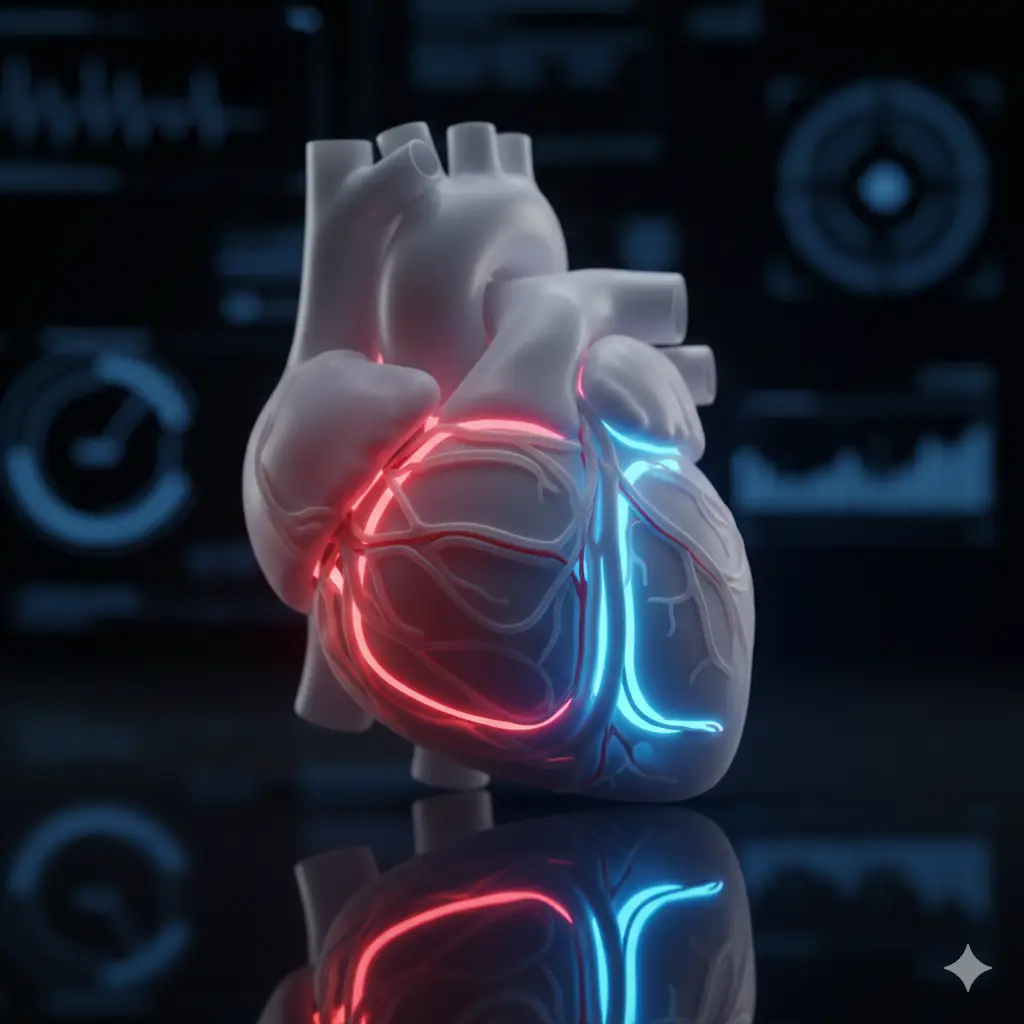
    Welcome to educatin.site, where we explore the most exciting frontiers in science and technology. Today, we’re delving into a truly groundbreaking area: soft robotic hearts. This research is taking cues from one of the body’s most vital organs, aiming to create better, more natural pumping systems.

    The human heart is an incredible machine, a marvel of efficiency and resilience. Its natural, rhythmic, and flexible motion is something engineers have long sought to replicate. Now, through soft robotics, we are moving closer than ever to achieving that goal, not with rigid metal, but with compliant, life-like materials.

    This approach moves beyond traditional, stiff mechanical pumps. It offers the potential for devices that can interact with biological systems more gently, leading to a profound shift in cardiac support technology. Let’s explore how this beautiful bio-inspiration is coming to life.

    The Limitation of Traditional Pumps

    For decades, mechanical heart-assist devices have saved countless lives. However, they often rely on rigid parts that spin or slide, which can introduce problems. The sharp, non-pulsatile flow can be unnatural for the body.

    These rigid surfaces can damage blood cells, leading to clotting, stroke risk, and the need for continuous blood thinners. The very mechanical nature of the pump can cause wear and tear, necessitating eventual replacement. There is an inherent design conflict when using stiff components to handle a soft, fluid-filled organ.

    Soft robotics seeks to resolve this conflict by literally embodying the flexibility of natural tissue. By using compliant, stretchy materials, we can better simulate the smooth, contracting motion of the heart muscle itself.

    What is a Soft Robotic Heart?

    A soft robotic heart is essentially a pumping mechanism made primarily from flexible polymers, such as silicone or specialized elastomers. These materials allow the device to deform and move in ways that closely resemble biological cardiac tissue.

    Instead of using spinning turbines, these soft hearts typically use pneumatic or hydraulic actuation. This means they are powered by pressurized air or fluid being pumped into small chambers or channels within the soft material. The change in pressure causes the material to rhythmically expand and contract.

    Imagine squeezing a rubber bulb to push water out; a soft robotic heart works on a similar principle. This gentle, pulsatile action is far more harmonious with the body’s natural cardiovascular system, leading to a reduced risk of blood cell damage.

    Mimicking the Cardiac Cycle

    The key to efficiency lies in accurately modeling the natural cardiac cycle, which involves two main phases: systole (contraction) and diastole (relaxation). A successful soft robotic heart must seamlessly transition between these two states to ensure effective blood flow.

    Researchers design the soft pump chambers to contract from the outside in, just like the actual heart muscle. This creates a smooth, squeezing motion that maximizes blood expulsion while minimizing turbulent flow. This is crucial because turbulent, chaotic flow is a major contributor to blood clotting in conventional devices.

    For example, some designs use a series of interconnected actuators wrapped around the heart. When pressurized, these actuators squeeze the natural heart, helping it pump without ever directly touching the blood. This offers a gentler form of assistance than implanting an artificial pump directly into the bloodstream.

    The Advantage of Compliance

    The most compelling benefit of using soft materials is their compliance. The device can easily adjust its shape and motion to better match the surrounding biological tissue, promoting better integration within the body.

    Compliance reduces the likelihood of mechanical failure from repetitive stress, as flexible materials handle continuous deformation well. Furthermore, it helps prevent tissue damage or erosion where the device meets the patient’s existing organ. This natural interface is critical for long-term support.

    A highly compliant device is also easier to scale and customize. It can be tailored in size and shape to fit different patients, from small children to adults, simply by altering the mold used to cast the soft polymer. This level of personalized medicine is difficult to achieve with rigid, standardized metal parts.

    Potential Applications in Medicine

    The research into soft robotic hearts extends far beyond complete heart replacement. These flexible pumps offer promise for various cardiac support systems.

    Ventricular Assist Devices (VADs)

    A VAD is a mechanical pump used to support heart function in patients with end-stage heart failure. Soft robotic VADs could wrap around a weakened ventricle, gently squeezing it to augment its pumping power. This external support reduces stress on the native heart and allows it to rest and potentially recover.

    Unlike current VADs that draw blood out of the ventricle, a soft, external wrap could assist without ever touching the blood. This greatly mitigates the risk of blood damage and the associated side effects, making it a potentially safer, long-term solution while awaiting a transplant.

    Surgical and Training Models

    Beyond direct implantation, soft robotic hearts are invaluable for training and research. Surgeons can practice complex procedures on a soft, beating model that truly mimics the feel and response of a real organ.

    These models can be programmed to simulate various cardiac conditions, such as arrhythmias or valve failures. This provides a realistic, low-risk environment for students and experienced surgeons to hone their skills. They are also crucial for testing new drugs or medical devices under life-like conditions.

    The Road Ahead

    While the promise of soft robotic hearts is immense, they are still primarily in the research and development phase. Key challenges include miniaturizing the external power supply and control systems needed for actuation, and ensuring the long-term biocompatibility and durability of the soft materials in the body.

    Engineers are actively working on closed-loop control systems. These systems would use sensors to monitor the patient’s blood pressure and oxygen levels, automatically adjusting the pump’s frequency and force in real-time, just as a healthy heart naturally does in response to exercise or rest. The goal is truly autonomous, life-like assistance.

    The collaboration between material scientists, roboticists, and cardiac surgeons is driving this field forward. This interdisciplinary effort ensures that the devices are not only technologically advanced but also clinically relevant and safe for human patients.

    Tips for Understanding Biomechatronics

    • Focus on the concept of biomimicry—how technology copies nature’s solutions.
    • Understand the difference between rigid and compliant materials in medical devices.
    • Learn the basics of pneumatic and hydraulic actuation, the typical drivers of soft robots.
    • Recognize the importance of pulsatile flow for healthy blood circulation.
    • Keep an eye on advancements in biocompatible polymers, the building blocks of these systems.

    The development of soft robotic hearts is a testament to the power of learning from nature. By embracing the flexibility and efficiency of the natural cardiac tissue, we are creating a healthier, softer future for cardiac support. This is truly where engineering meets biology to heal and sustain life.

  • Jellyfish Propulsion: The Future of Aquatic Soft Robotics

    Jellyfish Propulsion: The Future of Aquatic Soft Robotics

    Jellyfish Propulsion: The Future of Aquatic Soft Robotics

    Welcome to educatin.site! Today, we’re diving into a fascinating area of innovation: how the humble jellyfish is inspiring a new generation of aquatic robots. Imagine robots that move with incredible grace and efficiency, using minimal energy. This isn’t science fiction; it’s the exciting world of jellyfish-inspired propulsion.

    Nature has always been our greatest teacher, and the jellyfish is a prime example of elegant engineering. Its simple yet effective method of movement offers profound lessons for creating robots that can navigate our oceans more sustainably. Let’s explore how these mesmerizing creatures are shaping the future of underwater technology.

    Understanding Jellyfish Movement

    Jellyfish move through a process called bell pulsation. They contract their bell-shaped bodies, expelling water to create a jet, which propels them forward. This seemingly simple action is highly optimized for efficiency.

    What makes it so efficient is not just the initial push, but also the subsequent refilling of the bell. As the bell expands, it draws water in, setting up the next propulsion cycle. This continuous, rhythmic motion allows them to glide with minimal energy expenditure.

    Think of it like pushing off a wall in a swimming pool, but doing so continuously and smoothly. This unique pulsatile flow creates vortices that aid in both propulsion and energy recovery, making jellyfish masters of low-energy locomotion.

    The Rise of Soft Robotics

    Traditional robots often rely on rigid components and complex motors. While powerful, these designs can be energy-intensive and less adaptable to dynamic environments. This is where soft robotics comes in, offering a flexible and resilient alternative.

    Soft robots are built from compliant materials, mimicking the flexibility of biological organisms. This allows them to interact with their surroundings more gently and safely. They can squeeze through tight spaces, absorb impacts, and even change shape, capabilities rigid robots struggle with.

    The field of soft robotics is rapidly expanding, driven by the desire for robots that are more robust, adaptable, and less prone to mechanical failure. Nature’s soft-bodied creatures, like the jellyfish, provide perfect blueprints for these new designs.

    Jellyfish as a Bio-Inspiration

    The elegant propulsion mechanism of the jellyfish is a goldmine for soft robot designers. Its ability to move through water with high efficiency and low energy consumption is exactly what researchers aim to replicate. This bio-inspiration isn’t just about copying; it’s about understanding the underlying principles.

    Researchers study the fluid dynamics of jellyfish movement to decode its secrets. They look at the shape of the bell, the frequency of pulsations, and how vortices are formed and utilized. This detailed analysis helps in designing artificial systems that can achieve similar performance.

    For example, a robotic jellyfish might use pneumatic or hydraulic actuators to mimic the bell’s contractions. Instead of traditional motors, these systems use pressurized fluids or air to create movement, allowing for smooth, continuous deformations similar to biological soft bodies.

    Designing Low-Energy Aquatic Robots

    The goal of jellyfish-inspired propulsion is to create aquatic robots that can operate for extended periods without frequent recharging. This is crucial for applications like long-term ocean monitoring, environmental sensing, and underwater exploration where power sources are limited.

    By adopting the pulsatile movement, these robots can significantly reduce their power draw. The efficiency comes from several factors: minimizing turbulent drag, harnessing fluid interactions for thrust, and the inherent energy-saving qualities of soft actuators compared to rigid motors.

    Consider a robot designed to monitor ocean currents or marine life. If it can move with the energy efficiency of a jellyfish, it could stay deployed for months, gathering invaluable data without human intervention. This capability revolutionizes how we study and interact with our underwater world.

    Practical Applications

    • Oceanic Research: Long-term data collection on temperature, salinity, and marine ecosystems.
    • Environmental Monitoring: Detecting pollution, tracking oil spills, or monitoring underwater habitats.
    • Search and Rescue: Navigating complex underwater environments to locate objects or individuals.
    • Infrastructure Inspection: Examining underwater pipelines, cables, and other structures without damaging them.

    Challenges and Future Directions

    While promising, replicating jellyfish propulsion in soft robots comes with its challenges. Materials need to be durable, flexible, and resistant to marine environments. Control systems must precisely coordinate movements to achieve optimal efficiency.

    Researchers are experimenting with advanced materials like hydrogels and silicone, which can withstand harsh underwater conditions. Developing sophisticated control algorithms that can mimic the subtle nuances of jellyfish movement is also a key area of focus. Imagine a robot that can autonomously adapt its pulsation frequency based on current or desired speed, much like a living jellyfish.

    The future looks bright for jellyfish-inspired soft robotics. As materials science and artificial intelligence advance, we can expect to see more sophisticated and autonomous aquatic robots. These innovations will not only expand our understanding of the oceans but also provide sustainable solutions for various underwater tasks.

    From exploring deep-sea trenches to safeguarding coral reefs, these low-energy, efficient robots are poised to make a significant impact. They represent a harmonious blend of nature’s wisdom and human ingenuity, paving the way for a new era of gentle and effective underwater exploration.

    Tips for Aspiring Roboticists

    • Study biomimicry and fluid dynamics to understand natural propulsion systems.
    • Experiment with soft materials like silicone or elastomers for flexible robot bodies.
    • Learn about pneumatic and hydraulic actuation for creating soft robot movement.
    • Focus on energy efficiency in your designs; small improvements can lead to big gains.
    • Collaborate with marine biologists to gain deeper insights into aquatic life.
  • Soft Continuum Robotics: Redefining Robotic Motion

    Soft Continuum Robotics: Redefining Robotic Motion

    Introduction to Soft Robotics

    Robots have long been associated with rigid, metallic structures, moving with precise, often abrupt, motions. Think of the industrial arms in factories, meticulously placing parts, or the wheeled explorers navigating distant planets. These robots excel in structured environments where predictability is paramount. However, the world isn’t always rigid and predictable.

    Enter the fascinating realm of soft continuum robotics. Unlike their stiff counterparts, these robots are designed with inherently flexible, often deformable, bodies. Imagine a robot that can squeeze through tight spaces like an octopus or gently grasp delicate objects without causing damage. This shift from rigid to soft dramatically redefines what robots can do and how they interact with their surroundings.

    What are Continuum Robots?

    At its core, a continuum robot lacks discrete, rigid joints. Instead, its body bends and curves continuously, much like an elephant’s trunk or a snake. This continuous structure allows for an infinite number of possible shapes and movements, providing unparalleled dexterity and adaptability that rigid robots simply cannot match. It’s a complete rethinking of robotic articulation.

    This design principle is heavily inspired by biology, a field known as biomimicry. Nature is replete with examples of highly effective soft manipulators, from the tentacles of a squid to the tendrils of a plant. By emulating these natural designs, engineers can create robots capable of navigating complex, unstructured, and often delicate environments.

    The Challenge of Motion Control

    Controlling a rigid robot involves calculating the angles of its joints to achieve a desired position. It’s like solving a series of straightforward geometric equations. For a soft continuum robot, however, the challenge is far more intricate. Because its body can take on an infinite number of shapes, traditional joint-based control methods are ineffective.

    Instead, motion control in soft continuum robotics often involves influencing the robot’s entire body shape. This might include using internal pressures, tensions, or external forces to create a desired curve or bend. It’s less about moving individual parts and more about sculpting the robot’s form in real-time to achieve a task, a concept that requires a completely different computational approach.

    New Control Paradigms

    To tackle this complexity, researchers are developing innovative control paradigms. One common approach involves modeling the robot’s body as a series of interconnected, deformable segments. Control inputs, such as pneumatic pressure or cable tension, are then applied to these segments to induce desired bending or elongation.

    Another powerful method is using machine learning, particularly reinforcement learning. Robots can learn through trial and error how to achieve specific motions by interacting with their environment. This allows them to develop highly intuitive and adaptive control strategies that are difficult to program explicitly, especially given the high dimensionality of soft robot movements.

    Materials and Actuation

    The flexibility of soft robots isn’t just about design; it’s also about the materials they’re made from and how they move. Common materials include various silicones, rubbers, and other elastomers. These materials allow for significant deformation without permanent damage, making them ideal for compliant interactions.

    Actuation, or how these robots move, is equally diverse. Pneumatic or hydraulic systems are frequently used, where air or fluid pressure inflates chambers within the robot’s body, causing it to bend or extend. Cable-driven systems, where internal cables are pulled to create curvature, are another popular method. These actuation strategies are crucial for achieving the nuanced and continuous motion characteristic of these robots.

    Pneumatic Artificial Muscles

    A particularly interesting actuation method involves Pneumatic Artificial Muscles (PAMs). These are essentially soft, inflatable tubes that contract when pressurized, mimicking the action of biological muscles. By strategically embedding PAMs within a robot’s body, engineers can create powerful yet compliant movements, allowing for both fine manipulation and robust interaction.

    Applications of Soft Continuum Robots

    The unique capabilities of soft continuum robots open doors to applications that were previously impossible for traditional robots. Their ability to conform to irregular surfaces, absorb impacts, and operate safely near humans makes them invaluable in many fields.

    Medical and Surgical Robotics

    In medicine, soft robots offer revolutionary possibilities. Imagine a surgical robot that can navigate intricate pathways within the human body, gently bypassing delicate organs without the risk of rigid instrument damage. These robots could perform minimally invasive procedures, reducing patient recovery times and improving surgical outcomes. They can also be used for rehabilitation, providing gentle and adaptable assistance to patients recovering from injuries.

    For instance, soft robotic grippers can handle fragile tissues during surgery with unmatched dexterity, minimizing trauma. Their inherent compliance means they can safely interact with the human body, providing a safer and more effective tool for medical professionals. This adaptability is a game-changer for delicate operations.

    Exploration and Search & Rescue

    In hazardous environments, such as disaster zones or confined spaces, soft robots shine. Their ability to squeeze through rubble, climb over obstacles, and investigate areas inaccessible to humans or rigid robots can be life-saving. They can provide reconnaissance, deliver supplies, or even assist in extracting survivors without posing additional risks.

    Picture a snake-like robot wending its way through a collapsed building, its soft body allowing it to navigate tight crevices and uneven terrain. This adaptability is crucial for gathering information in environments where precision and gentle interaction are paramount, offering a new paradigm for disaster response.

    Manufacturing and Manipulation

    While often associated with delicate tasks, soft robots are also making inroads into manufacturing. Their ability to gently grasp and manipulate irregularly shaped or fragile objects without causing damage is a significant advantage. This can range from handling delicate electronics to packaging fresh produce, where consistent force distribution is vital.

    Traditional grippers often require complex mechanisms to adjust to different object shapes, but soft grippers can simply conform. This reduces complexity and increases versatility on the production line, allowing for more flexible automation processes and handling a wider variety of items with a single tool.

    Future Directions and Challenges

    Despite their immense promise, soft continuum robotics face several challenges. Miniaturization, developing even more advanced control algorithms, and enhancing their sensing capabilities are active areas of research. Integrating soft sensors that can detect pressure, temperature, and even chemical changes directly into the robot’s skin is crucial for more sophisticated interactions.

    Another frontier is improving the energy efficiency of soft robots, as current actuation methods can sometimes be power-intensive. The development of self-healing materials, allowing robots to repair minor damage on the go, is also a fascinating area of ongoing exploration. These advancements will further expand the capabilities and reliability of soft robots.

    Conclusion

    Soft continuum robotics represents a significant paradigm shift in how we conceive and design robots. By embracing flexibility and continuous motion, these robots are breaking free from the limitations of rigid structures, opening up a world of new possibilities.

    From navigating the human body to exploring inaccessible environments, soft robots are not just changing what robots can do, but how they interact with the world around us. As research continues to advance, we can expect to see these compliant and adaptable machines playing an increasingly vital role in our lives, offering gentle yet powerful solutions to complex problems.

    Notes:

    • Biomimicry is key to many soft robotic designs, drawing inspiration from nature’s efficient solutions.
    • The interplay of materials science, advanced manufacturing, and AI is driving rapid innovation in this field.
    • Safety and compliance are inherent advantages, making them ideal for human-robot collaboration.