Tag: biomimicry

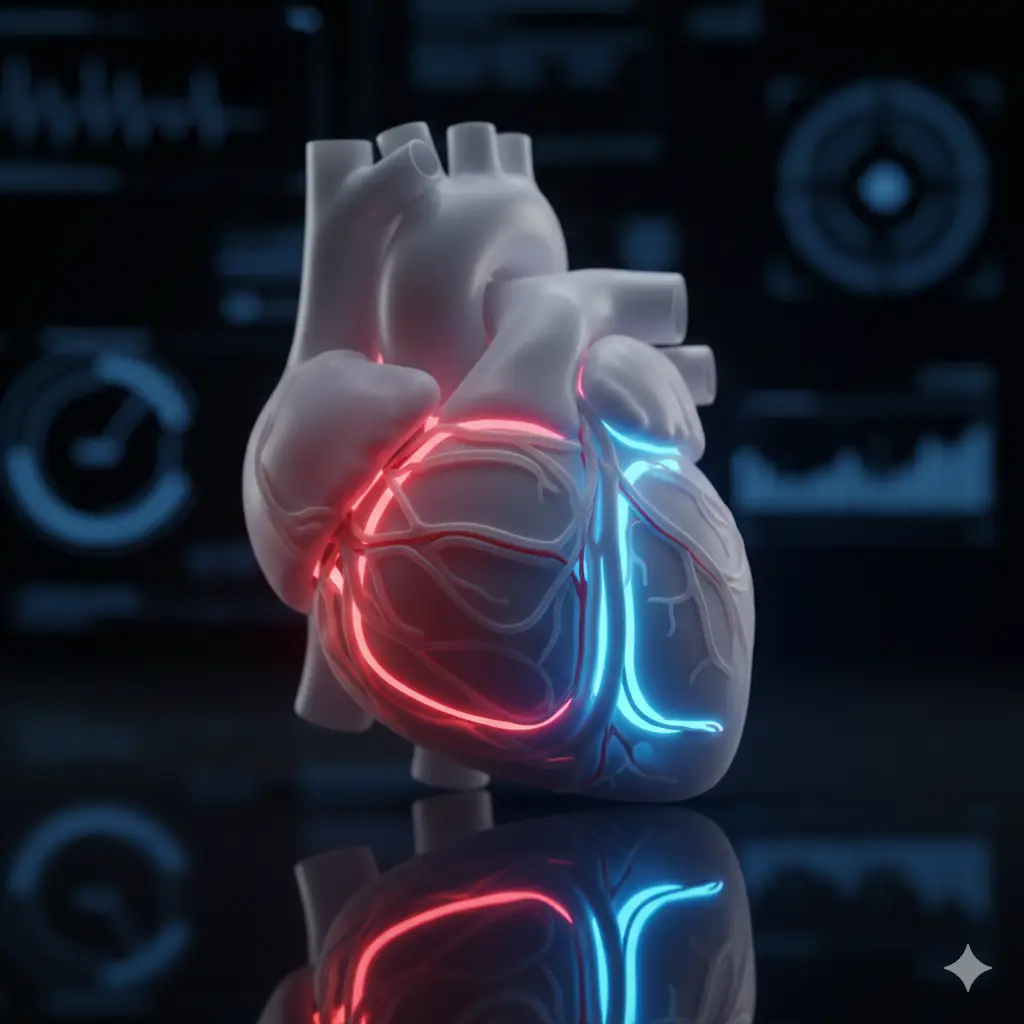
  • Soft Robotic Hearts: Mimicking Nature’s Pumping Power

    Soft Robotic Hearts: Mimicking Nature’s Pumping Power

    Soft Robotic Hearts: Mimicking Nature’s Pumping Power

    Welcome to educatin.site, where we explore the most exciting frontiers in science and technology. Today, we’re delving into a truly groundbreaking area: soft robotic hearts. This research is taking cues from one of the body’s most vital organs, aiming to create better, more natural pumping systems.

    The human heart is an incredible machine, a marvel of efficiency and resilience. Its natural, rhythmic, and flexible motion is something engineers have long sought to replicate. Now, through soft robotics, we are moving closer than ever to achieving that goal, not with rigid metal, but with compliant, life-like materials.

    This approach moves beyond traditional, stiff mechanical pumps. It offers the potential for devices that can interact with biological systems more gently, leading to a profound shift in cardiac support technology. Let’s explore how this beautiful bio-inspiration is coming to life.

    The Limitation of Traditional Pumps

    For decades, mechanical heart-assist devices have saved countless lives. However, they often rely on rigid parts that spin or slide, which can introduce problems. The sharp, non-pulsatile flow can be unnatural for the body.

    These rigid surfaces can damage blood cells, leading to clotting, stroke risk, and the need for continuous blood thinners. The very mechanical nature of the pump can cause wear and tear, necessitating eventual replacement. There is an inherent design conflict when using stiff components to handle a soft, fluid-filled organ.

    Soft robotics seeks to resolve this conflict by literally embodying the flexibility of natural tissue. By using compliant, stretchy materials, we can better simulate the smooth, contracting motion of the heart muscle itself.

    What is a Soft Robotic Heart?

    A soft robotic heart is essentially a pumping mechanism made primarily from flexible polymers, such as silicone or specialized elastomers. These materials allow the device to deform and move in ways that closely resemble biological cardiac tissue.

    Instead of using spinning turbines, these soft hearts typically use pneumatic or hydraulic actuation. This means they are powered by pressurized air or fluid being pumped into small chambers or channels within the soft material. The change in pressure causes the material to rhythmically expand and contract.

    Imagine squeezing a rubber bulb to push water out; a soft robotic heart works on a similar principle. This gentle, pulsatile action is far more harmonious with the body’s natural cardiovascular system, leading to a reduced risk of blood cell damage.

    Mimicking the Cardiac Cycle

    The key to efficiency lies in accurately modeling the natural cardiac cycle, which involves two main phases: systole (contraction) and diastole (relaxation). A successful soft robotic heart must seamlessly transition between these two states to ensure effective blood flow.

    Researchers design the soft pump chambers to contract from the outside in, just like the actual heart muscle. This creates a smooth, squeezing motion that maximizes blood expulsion while minimizing turbulent flow. This is crucial because turbulent, chaotic flow is a major contributor to blood clotting in conventional devices.

    For example, some designs use a series of interconnected actuators wrapped around the heart. When pressurized, these actuators squeeze the natural heart, helping it pump without ever directly touching the blood. This offers a gentler form of assistance than implanting an artificial pump directly into the bloodstream.

    The Advantage of Compliance

    The most compelling benefit of using soft materials is their compliance. The device can easily adjust its shape and motion to better match the surrounding biological tissue, promoting better integration within the body.

    Compliance reduces the likelihood of mechanical failure from repetitive stress, as flexible materials handle continuous deformation well. Furthermore, it helps prevent tissue damage or erosion where the device meets the patient’s existing organ. This natural interface is critical for long-term support.

    A highly compliant device is also easier to scale and customize. It can be tailored in size and shape to fit different patients, from small children to adults, simply by altering the mold used to cast the soft polymer. This level of personalized medicine is difficult to achieve with rigid, standardized metal parts.

    Potential Applications in Medicine

    The research into soft robotic hearts extends far beyond complete heart replacement. These flexible pumps offer promise for various cardiac support systems.

    Ventricular Assist Devices (VADs)

    A VAD is a mechanical pump used to support heart function in patients with end-stage heart failure. Soft robotic VADs could wrap around a weakened ventricle, gently squeezing it to augment its pumping power. This external support reduces stress on the native heart and allows it to rest and potentially recover.

    Unlike current VADs that draw blood out of the ventricle, a soft, external wrap could assist without ever touching the blood. This greatly mitigates the risk of blood damage and the associated side effects, making it a potentially safer, long-term solution while awaiting a transplant.

    Surgical and Training Models

    Beyond direct implantation, soft robotic hearts are invaluable for training and research. Surgeons can practice complex procedures on a soft, beating model that truly mimics the feel and response of a real organ.

    These models can be programmed to simulate various cardiac conditions, such as arrhythmias or valve failures. This provides a realistic, low-risk environment for students and experienced surgeons to hone their skills. They are also crucial for testing new drugs or medical devices under life-like conditions.

    The Road Ahead

    While the promise of soft robotic hearts is immense, they are still primarily in the research and development phase. Key challenges include miniaturizing the external power supply and control systems needed for actuation, and ensuring the long-term biocompatibility and durability of the soft materials in the body.

    Engineers are actively working on closed-loop control systems. These systems would use sensors to monitor the patient’s blood pressure and oxygen levels, automatically adjusting the pump’s frequency and force in real-time, just as a healthy heart naturally does in response to exercise or rest. The goal is truly autonomous, life-like assistance.

    The collaboration between material scientists, roboticists, and cardiac surgeons is driving this field forward. This interdisciplinary effort ensures that the devices are not only technologically advanced but also clinically relevant and safe for human patients.

    Tips for Understanding Biomechatronics

    • Focus on the concept of biomimicry—how technology copies nature’s solutions.
    • Understand the difference between rigid and compliant materials in medical devices.
    • Learn the basics of pneumatic and hydraulic actuation, the typical drivers of soft robots.
    • Recognize the importance of pulsatile flow for healthy blood circulation.
    • Keep an eye on advancements in biocompatible polymers, the building blocks of these systems.

    The development of soft robotic hearts is a testament to the power of learning from nature. By embracing the flexibility and efficiency of the natural cardiac tissue, we are creating a healthier, softer future for cardiac support. This is truly where engineering meets biology to heal and sustain life.

  • Soft Continuum Robotics: Redefining Robotic Motion

    Soft Continuum Robotics: Redefining Robotic Motion

    Introduction to Soft Robotics

    Robots have long been associated with rigid, metallic structures, moving with precise, often abrupt, motions. Think of the industrial arms in factories, meticulously placing parts, or the wheeled explorers navigating distant planets. These robots excel in structured environments where predictability is paramount. However, the world isn’t always rigid and predictable.

    Enter the fascinating realm of soft continuum robotics. Unlike their stiff counterparts, these robots are designed with inherently flexible, often deformable, bodies. Imagine a robot that can squeeze through tight spaces like an octopus or gently grasp delicate objects without causing damage. This shift from rigid to soft dramatically redefines what robots can do and how they interact with their surroundings.

    What are Continuum Robots?

    At its core, a continuum robot lacks discrete, rigid joints. Instead, its body bends and curves continuously, much like an elephant’s trunk or a snake. This continuous structure allows for an infinite number of possible shapes and movements, providing unparalleled dexterity and adaptability that rigid robots simply cannot match. It’s a complete rethinking of robotic articulation.

    This design principle is heavily inspired by biology, a field known as biomimicry. Nature is replete with examples of highly effective soft manipulators, from the tentacles of a squid to the tendrils of a plant. By emulating these natural designs, engineers can create robots capable of navigating complex, unstructured, and often delicate environments.

    The Challenge of Motion Control

    Controlling a rigid robot involves calculating the angles of its joints to achieve a desired position. It’s like solving a series of straightforward geometric equations. For a soft continuum robot, however, the challenge is far more intricate. Because its body can take on an infinite number of shapes, traditional joint-based control methods are ineffective.

    Instead, motion control in soft continuum robotics often involves influencing the robot’s entire body shape. This might include using internal pressures, tensions, or external forces to create a desired curve or bend. It’s less about moving individual parts and more about sculpting the robot’s form in real-time to achieve a task, a concept that requires a completely different computational approach.

    New Control Paradigms

    To tackle this complexity, researchers are developing innovative control paradigms. One common approach involves modeling the robot’s body as a series of interconnected, deformable segments. Control inputs, such as pneumatic pressure or cable tension, are then applied to these segments to induce desired bending or elongation.

    Another powerful method is using machine learning, particularly reinforcement learning. Robots can learn through trial and error how to achieve specific motions by interacting with their environment. This allows them to develop highly intuitive and adaptive control strategies that are difficult to program explicitly, especially given the high dimensionality of soft robot movements.

    Materials and Actuation

    The flexibility of soft robots isn’t just about design; it’s also about the materials they’re made from and how they move. Common materials include various silicones, rubbers, and other elastomers. These materials allow for significant deformation without permanent damage, making them ideal for compliant interactions.

    Actuation, or how these robots move, is equally diverse. Pneumatic or hydraulic systems are frequently used, where air or fluid pressure inflates chambers within the robot’s body, causing it to bend or extend. Cable-driven systems, where internal cables are pulled to create curvature, are another popular method. These actuation strategies are crucial for achieving the nuanced and continuous motion characteristic of these robots.

    Pneumatic Artificial Muscles

    A particularly interesting actuation method involves Pneumatic Artificial Muscles (PAMs). These are essentially soft, inflatable tubes that contract when pressurized, mimicking the action of biological muscles. By strategically embedding PAMs within a robot’s body, engineers can create powerful yet compliant movements, allowing for both fine manipulation and robust interaction.

    Applications of Soft Continuum Robots

    The unique capabilities of soft continuum robots open doors to applications that were previously impossible for traditional robots. Their ability to conform to irregular surfaces, absorb impacts, and operate safely near humans makes them invaluable in many fields.

    Medical and Surgical Robotics

    In medicine, soft robots offer revolutionary possibilities. Imagine a surgical robot that can navigate intricate pathways within the human body, gently bypassing delicate organs without the risk of rigid instrument damage. These robots could perform minimally invasive procedures, reducing patient recovery times and improving surgical outcomes. They can also be used for rehabilitation, providing gentle and adaptable assistance to patients recovering from injuries.

    For instance, soft robotic grippers can handle fragile tissues during surgery with unmatched dexterity, minimizing trauma. Their inherent compliance means they can safely interact with the human body, providing a safer and more effective tool for medical professionals. This adaptability is a game-changer for delicate operations.

    Exploration and Search & Rescue

    In hazardous environments, such as disaster zones or confined spaces, soft robots shine. Their ability to squeeze through rubble, climb over obstacles, and investigate areas inaccessible to humans or rigid robots can be life-saving. They can provide reconnaissance, deliver supplies, or even assist in extracting survivors without posing additional risks.

    Picture a snake-like robot wending its way through a collapsed building, its soft body allowing it to navigate tight crevices and uneven terrain. This adaptability is crucial for gathering information in environments where precision and gentle interaction are paramount, offering a new paradigm for disaster response.

    Manufacturing and Manipulation

    While often associated with delicate tasks, soft robots are also making inroads into manufacturing. Their ability to gently grasp and manipulate irregularly shaped or fragile objects without causing damage is a significant advantage. This can range from handling delicate electronics to packaging fresh produce, where consistent force distribution is vital.

    Traditional grippers often require complex mechanisms to adjust to different object shapes, but soft grippers can simply conform. This reduces complexity and increases versatility on the production line, allowing for more flexible automation processes and handling a wider variety of items with a single tool.

    Future Directions and Challenges

    Despite their immense promise, soft continuum robotics face several challenges. Miniaturization, developing even more advanced control algorithms, and enhancing their sensing capabilities are active areas of research. Integrating soft sensors that can detect pressure, temperature, and even chemical changes directly into the robot’s skin is crucial for more sophisticated interactions.

    Another frontier is improving the energy efficiency of soft robots, as current actuation methods can sometimes be power-intensive. The development of self-healing materials, allowing robots to repair minor damage on the go, is also a fascinating area of ongoing exploration. These advancements will further expand the capabilities and reliability of soft robots.

    Conclusion

    Soft continuum robotics represents a significant paradigm shift in how we conceive and design robots. By embracing flexibility and continuous motion, these robots are breaking free from the limitations of rigid structures, opening up a world of new possibilities.

    From navigating the human body to exploring inaccessible environments, soft robots are not just changing what robots can do, but how they interact with the world around us. As research continues to advance, we can expect to see these compliant and adaptable machines playing an increasingly vital role in our lives, offering gentle yet powerful solutions to complex problems.

    Notes:

    • Biomimicry is key to many soft robotic designs, drawing inspiration from nature’s efficient solutions.
    • The interplay of materials science, advanced manufacturing, and AI is driving rapid innovation in this field.
    • Safety and compliance are inherent advantages, making them ideal for human-robot collaboration.